Why Our Students Love History: A Montessori Approach to the Past
At Lupine Montessori School, history isn’t taught through rote memorization or textbook timelines—it’s brought to life through stories, exploration, and discovery. Grounded in Dr. Maria Montessori’s vision, our history curriculum sparks wonder and helps children see their place in the grand unfolding of human history.
From the origins of the universe to ancient civilizations, our students don’t just learn about history—they experience it.
It All Begins with the Great Lessons
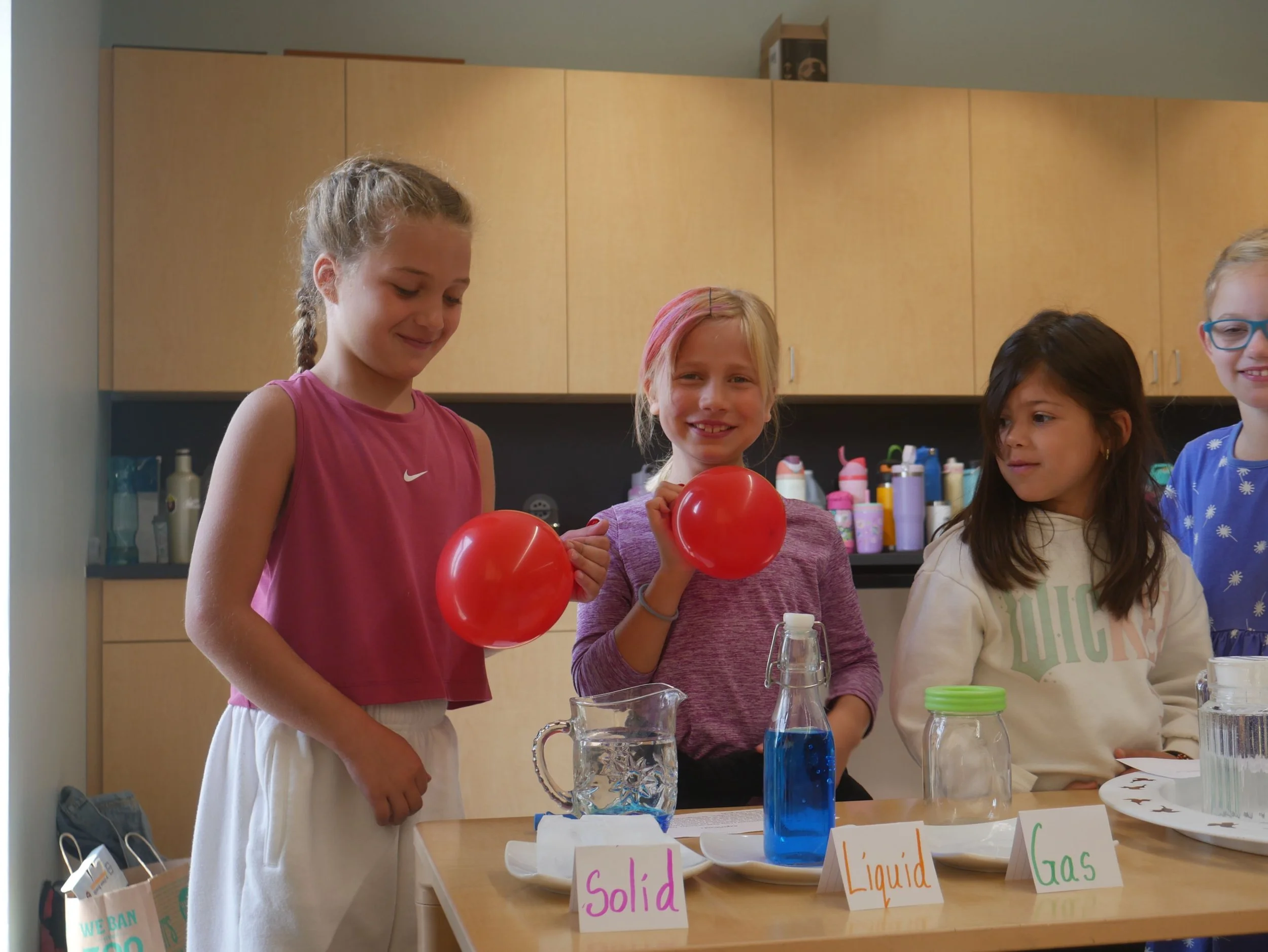
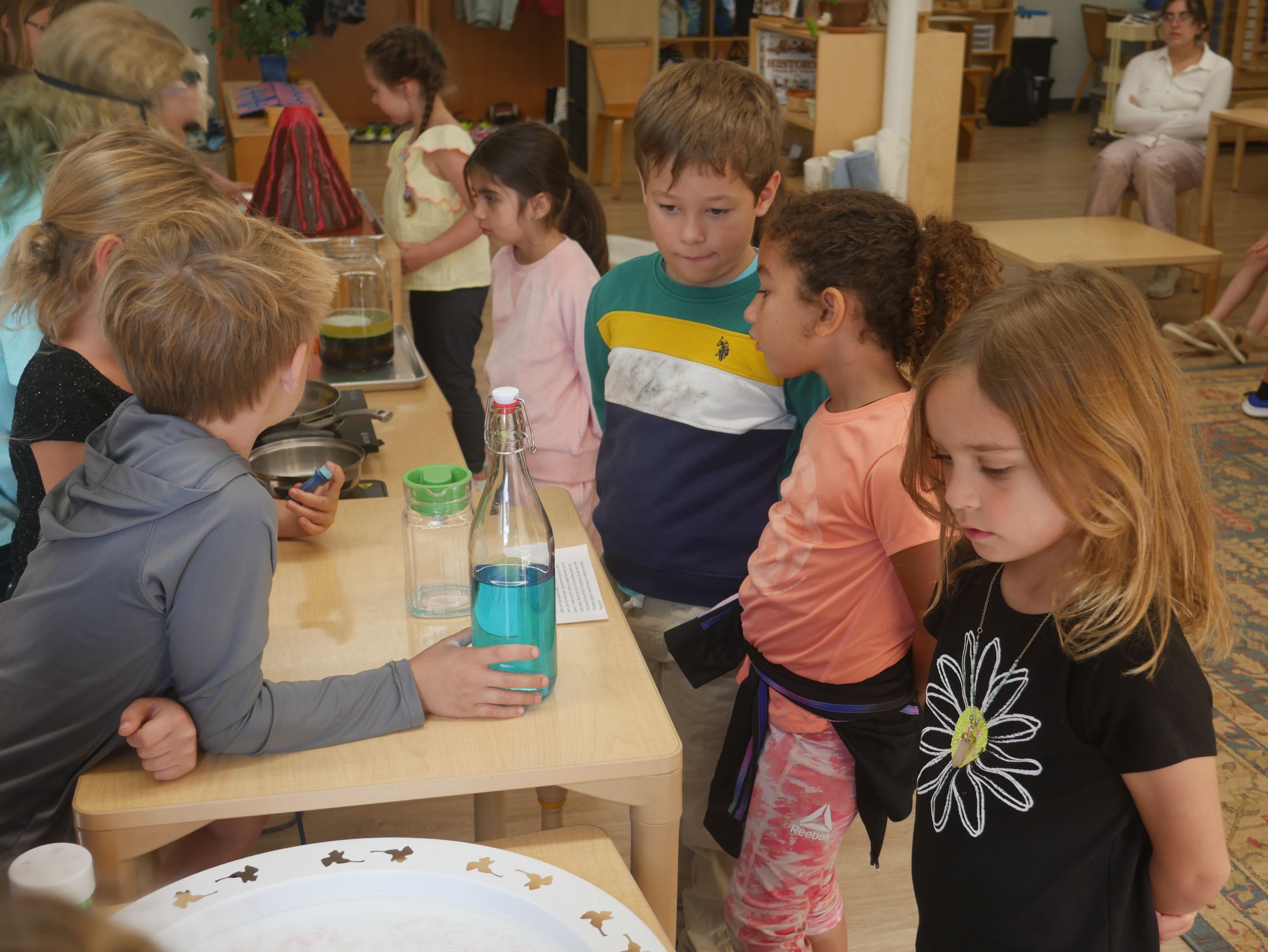
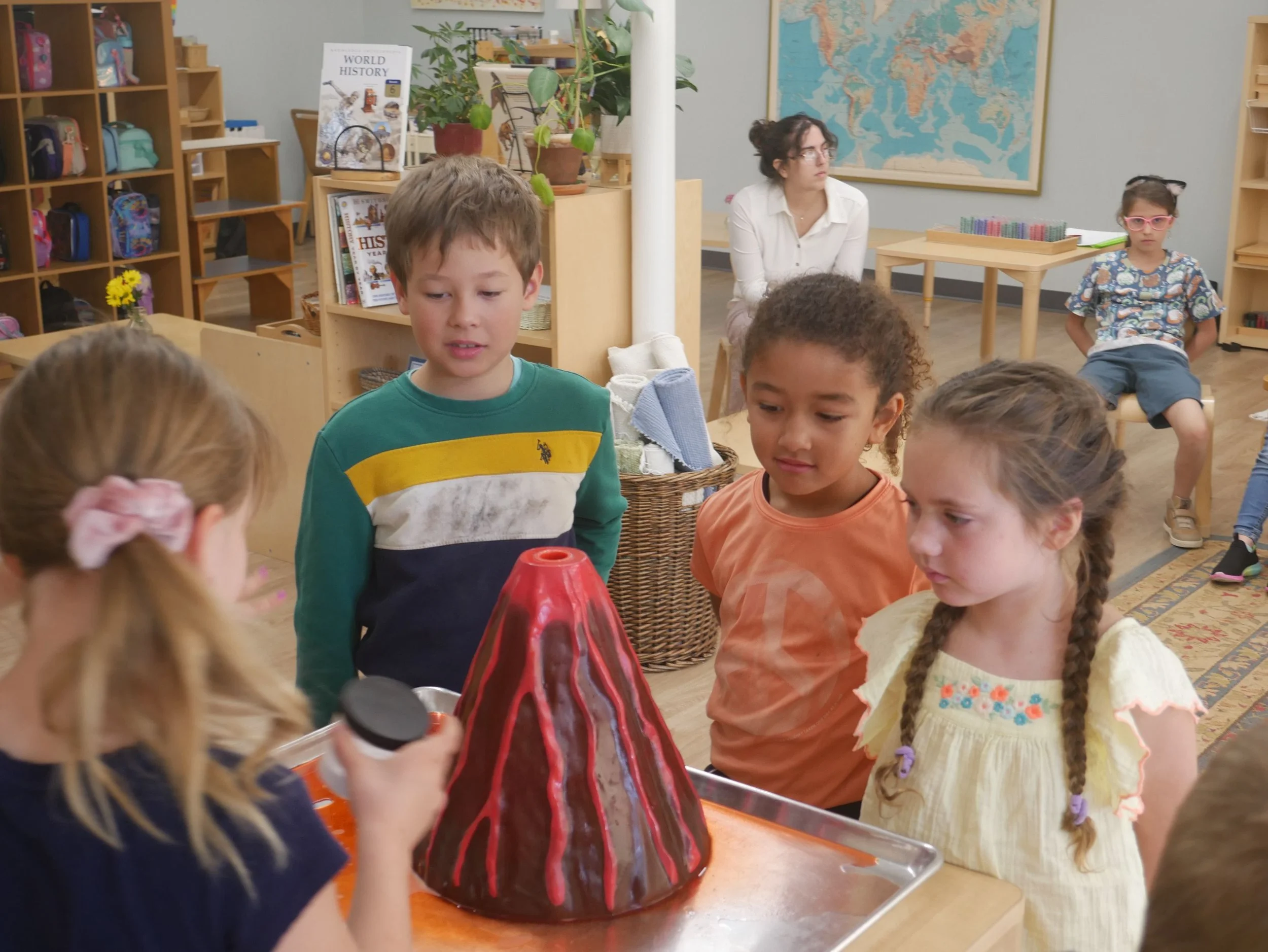
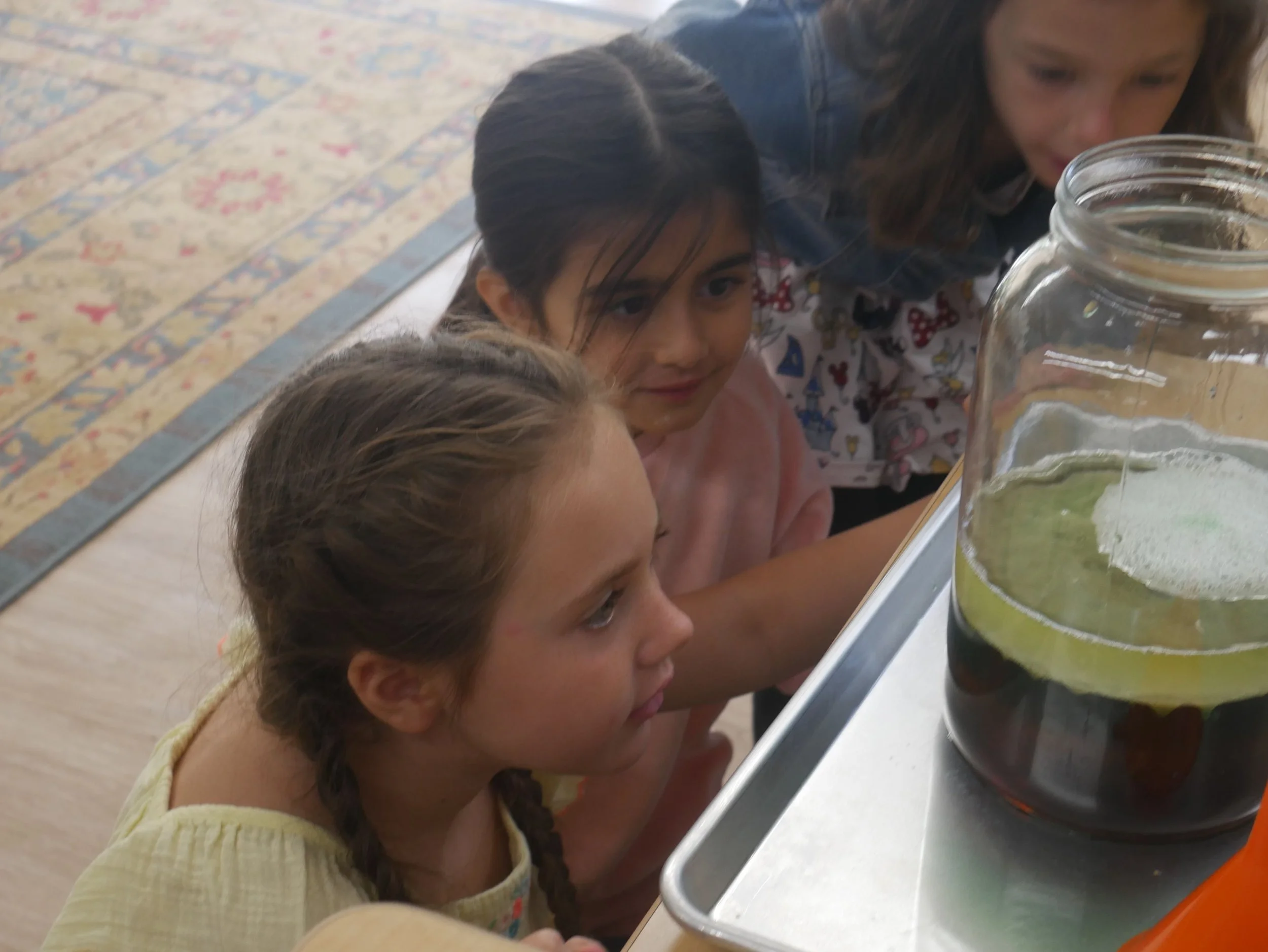
Each school year starts with a series of captivating, story-based presentations called the Great Lessons. These five foundational stories are designed to ignite curiosity and provide elementary students with a sweeping, interconnected understanding of the world.
The Coming of the Universe – A Montessori take on the Big Bang, inspiring awe at the origins of space, time, and matter.
The Timeline of Life – A vibrant visual representation of the evolution of life on Earth, from ancient ocean creatures to early humans.
The Coming of Humans – A look at early humans, their tools, rituals, and the development of culture.
The History of Language & The History of Numbers – These stories explore how communication and math emerged and evolved across civilizations.
These lessons are presented to the entire class and supported by beautiful materials, experiments, and charts. Older students often take on the role of presenting experiments to younger classmates, reinforcing their own learning while mentoring others.
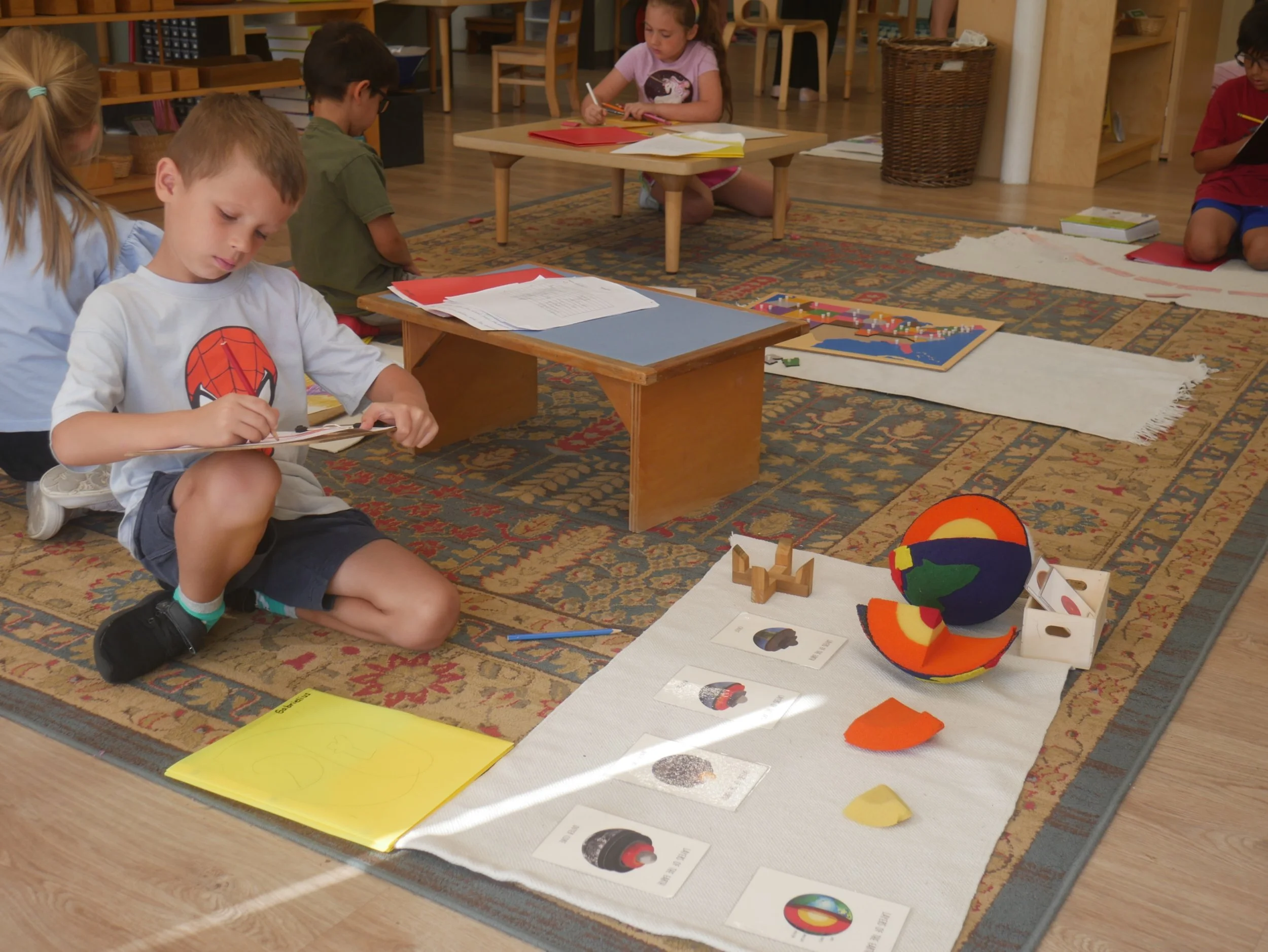
Exploring the layers of the earth.
Lower Elementary: Nurturing Curiosity and Connection
In the lower elementary years, children experience the Great Lessons each year, allowing them to build new layers of understanding. These early years are all about asking big questions, exploring big ideas, and connecting emotionally to the human story.
Highlights of the Lower Elementary History Curriculum:
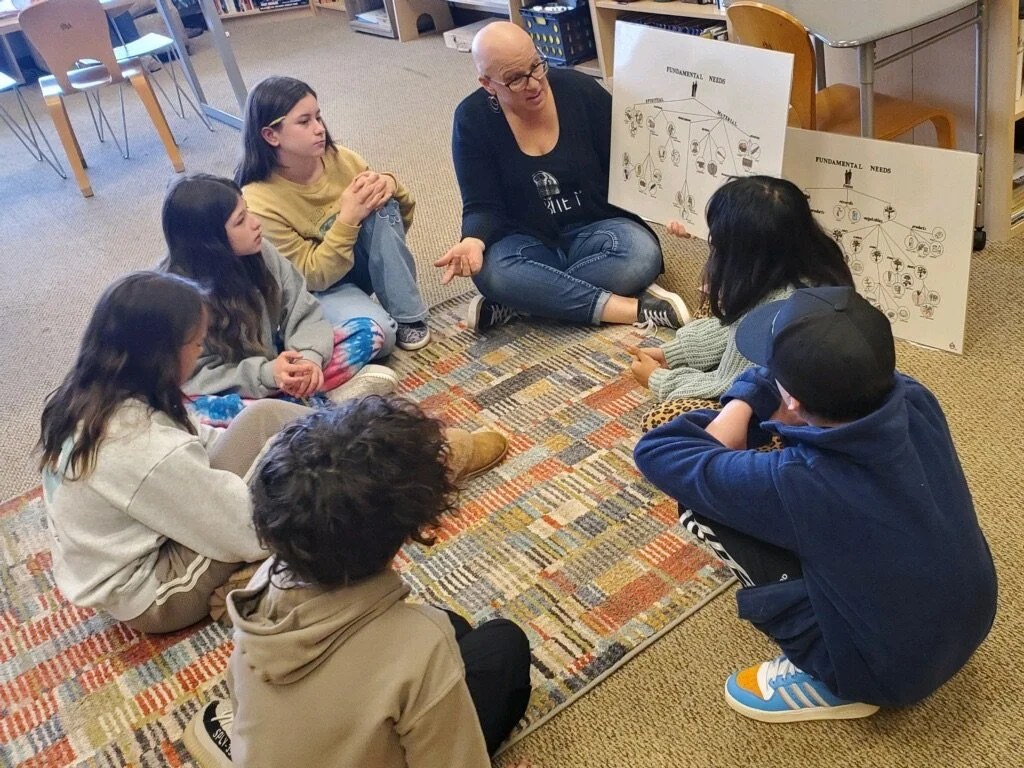
Timeline of Fundamental Needs
Students examine how humans have met essential needs—like shelter, food, and transportation—across time and cultures. Using illustrated cards, they compare ancient practices to modern innovations, such as solar-powered homes.Understanding Time
Lessons include how we measure time, why we call this year “2025,” and the origins of the days of the week and months of the year. These often spark deeper interest in mythology, early cultures, and calendars.Illinois and State History
Students explore the idea of statehood, conduct state research projects, and learn about the history of Illinois in age-appropriate ways.Gentle Introductions to Complex Topics
While major conflicts like world wars aren’t explored in depth at this level, we introduce the idea of changing borders and historical conflict through map studies and discussions about how countries have changed over time.
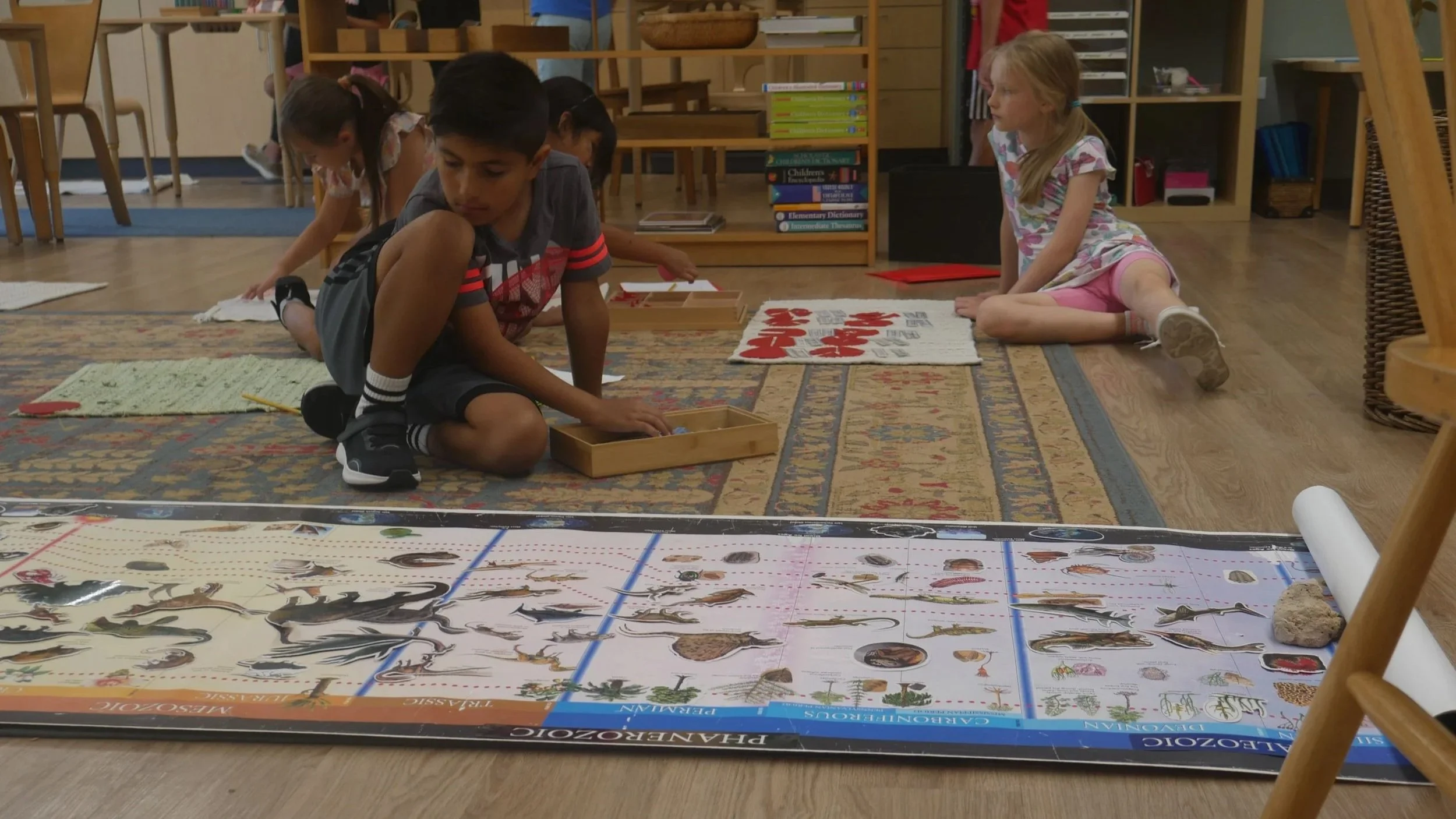
This study of the timeline of life, shows the development of animals across ancient eras. Matching the seemingly mythical creatures to the timeline beckons learners to deep thinking.
Upper Elementary: Deep Dives and Independent Discovery
As students grow, so does their capacity for critical thinking and historical analysis. In upper elementary, we revisit the Great Lessons and introduce a three-year rotation of in-depth history units, each focusing on a different era or theme.
Topics Include:
American History
Revolutionary War, Native American cultures, Civil War, Civil Rights Movement, U.S. Government, and more.World Civilizations
Ancient Egyptians, Greeks, Romans, Incas, Aztecs, medieval societies, and diverse Asian civilizations.

Learning Through Engagement:
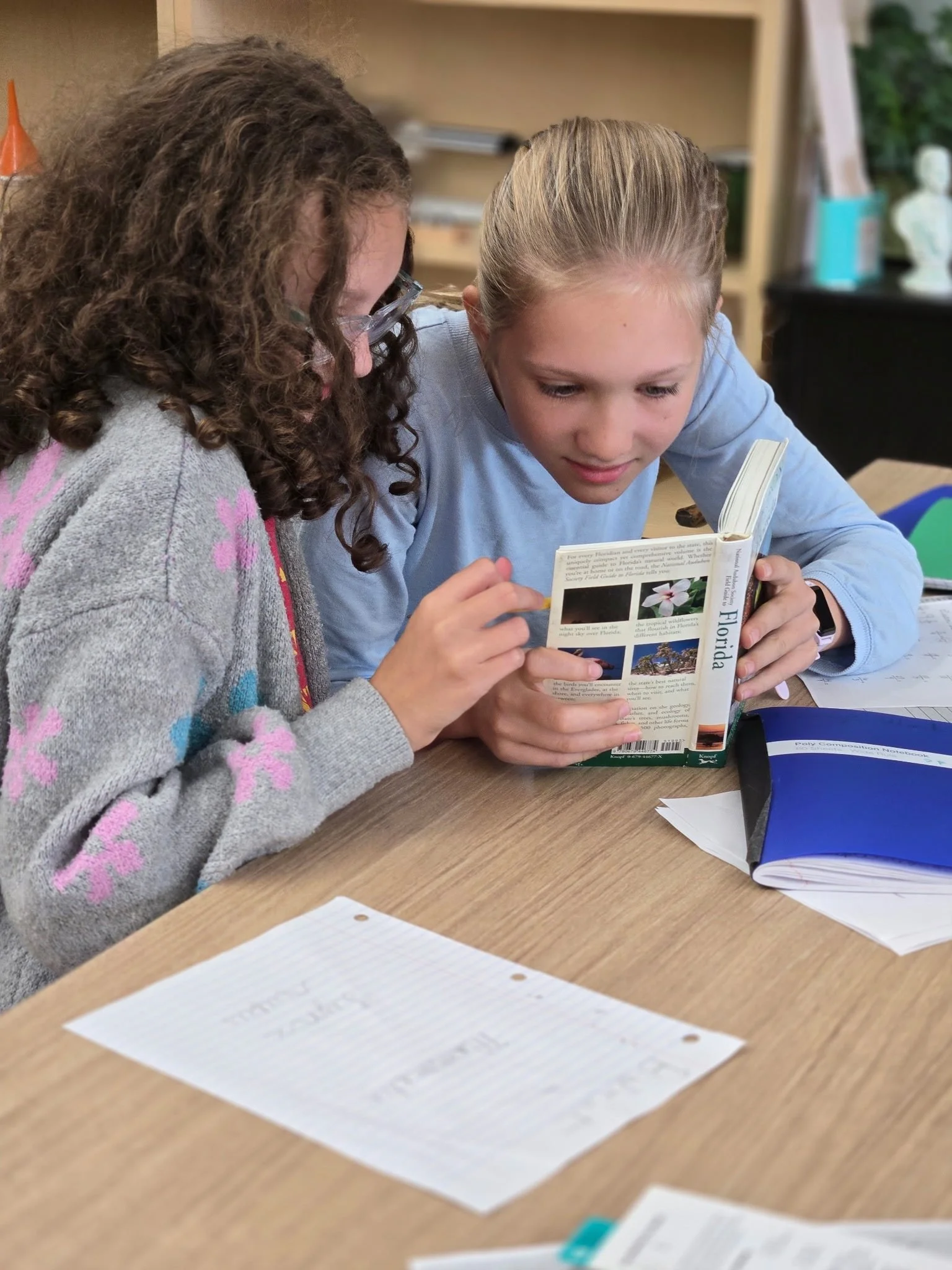
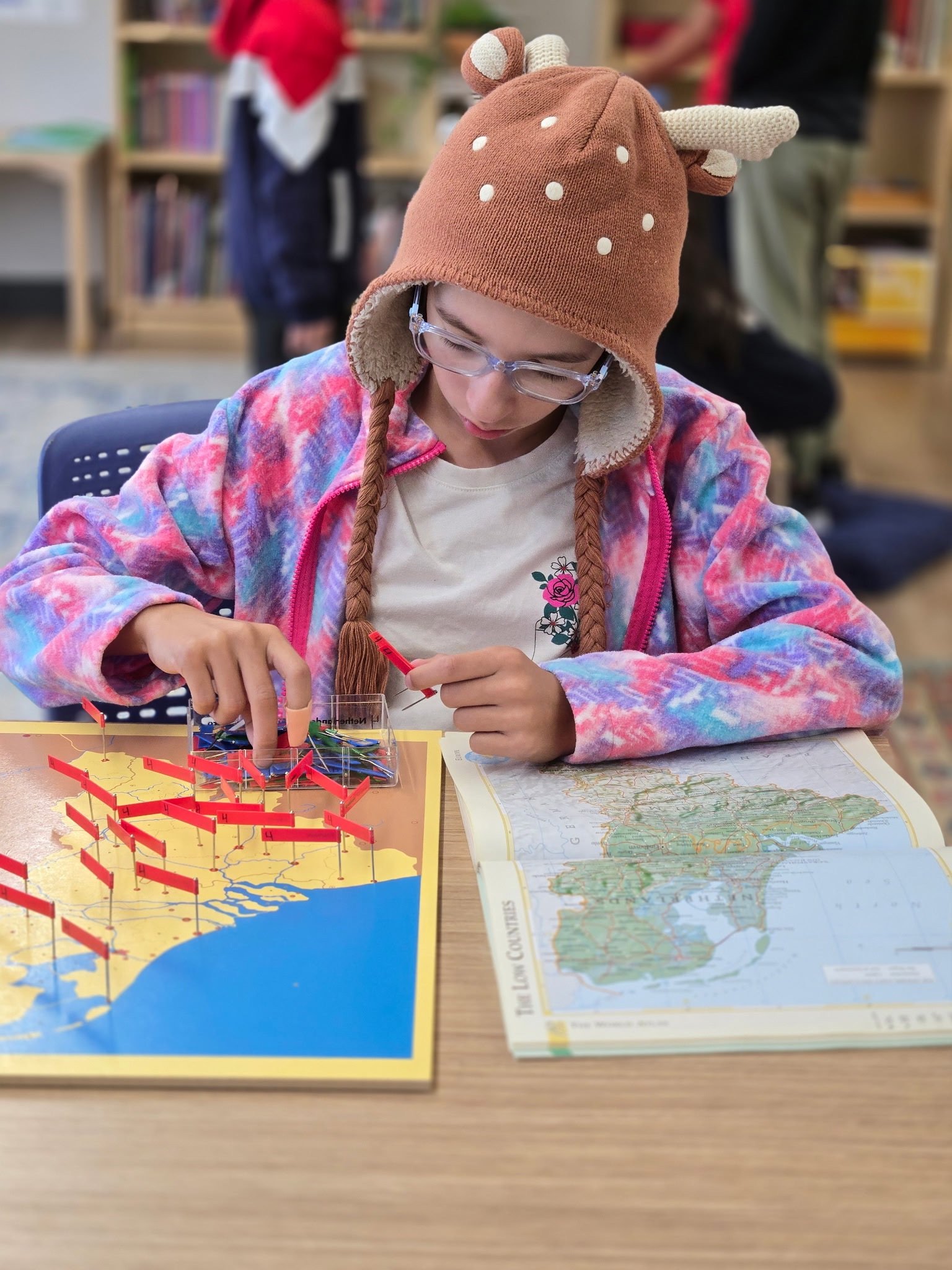
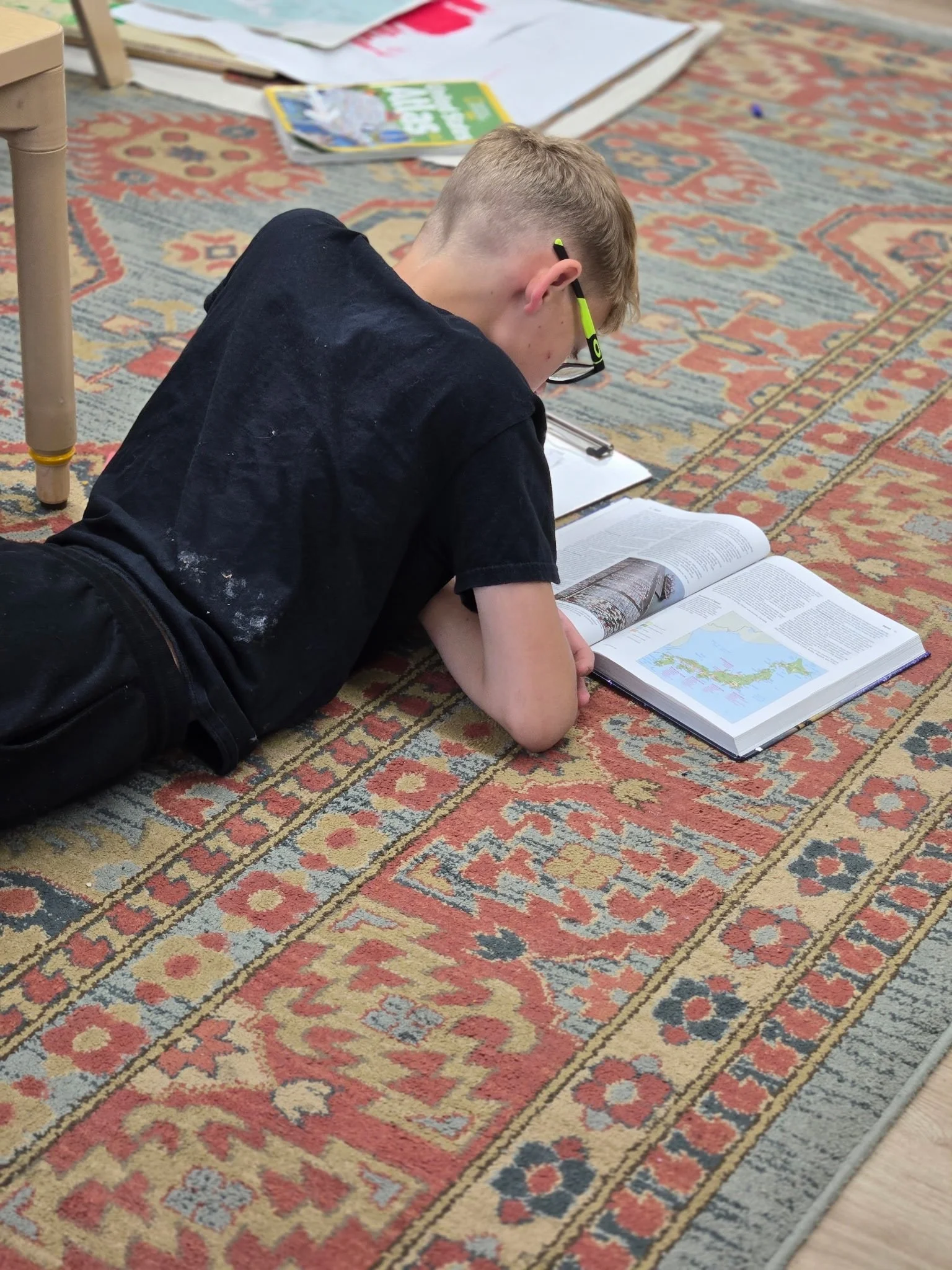
Students don’t just read about history—they explore it. They create detailed timelines, conduct research, write reflections, build models, and present their findings through art, writing, and oral presentations. They’re given the freedom to ask questions and follow their interests, making the learning truly their own.
A Curriculum That Grows with the Child
Montessori history is intentionally layered, experiential, and student-led. Topics are introduced when children are ready, revisited over time, and enriched through meaningful exploration. While not every subject is covered in detail early on, no area of history is off-limits—students are empowered to follow their curiosity as far as it leads.
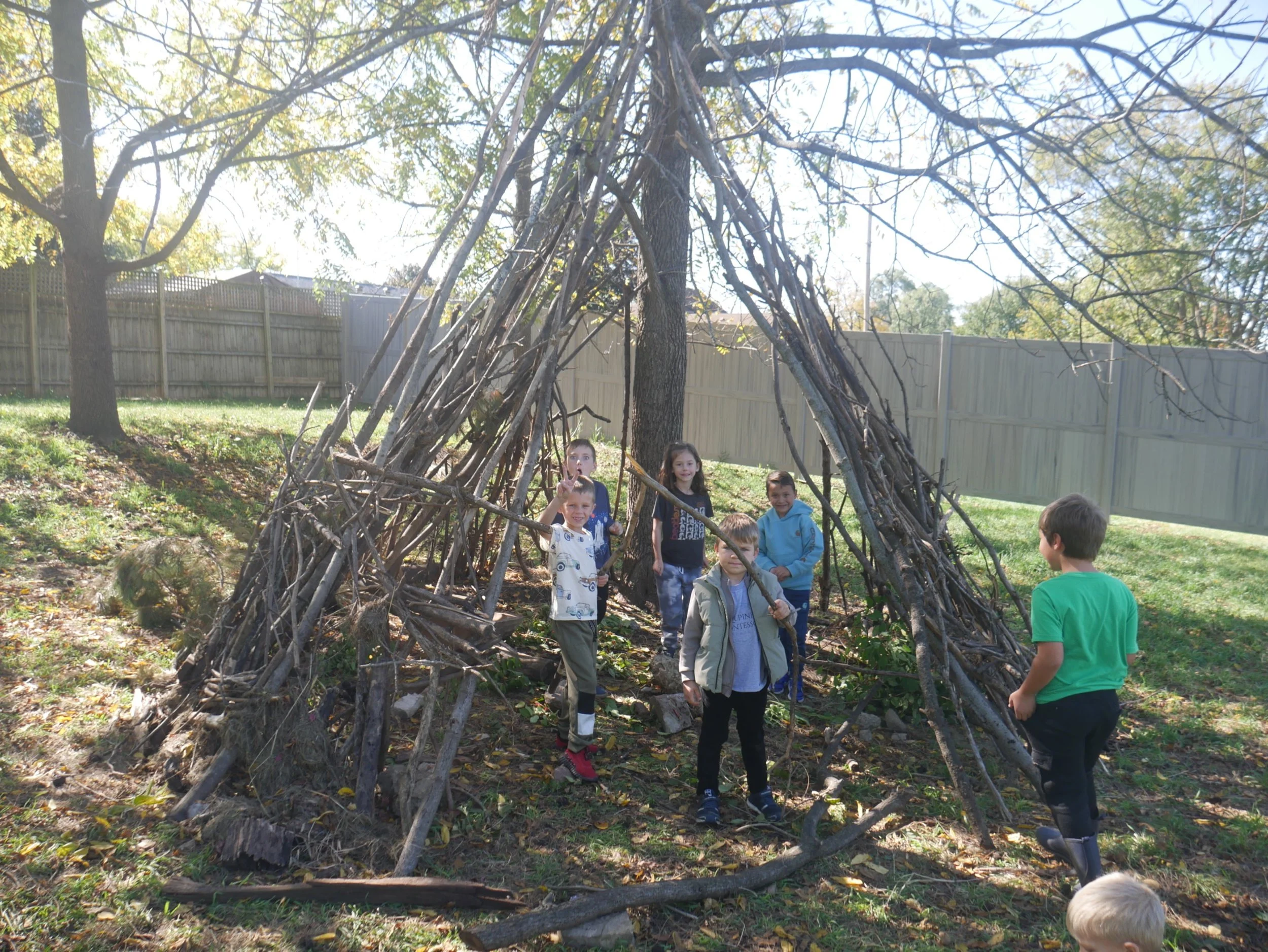
Building primitive shelters
By weaving storytelling, hands-on learning, and personal research into our approach, we help students not only understand history—but love it.
Want to learn more about our approach to Montessori education? Visit our Programs page or contact us to schedule a chat!